
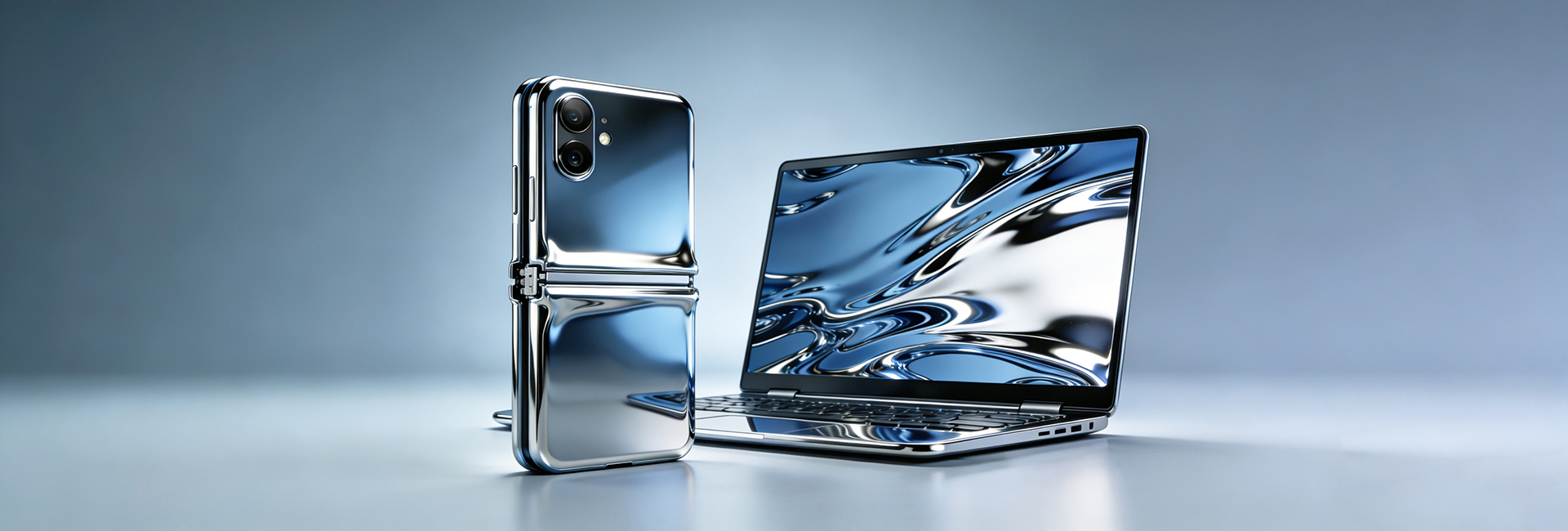
Liquid metal boasts promising prospects, characterized by outstanding advantages, expanding scenarios, growing scale, and remaining challenges. Its development can be clearly interpreted from four dimensions:
With unique properties including room-temperature fluidity, ultra-high thermal conductivity, and excellent chemical stability (detailed earlier), liquid metal is irreplaceable in scenarios incompatible with traditional materials. It aligns with the trends of miniaturized electronic devices, high-power industrial equipment, and precision high-end equipment, serving as a core material for upgrading thermal management and advanced manufacturing, and underpinning its long-term development.
Current applications cover thermal management, automotive electronics, aerospace, etc., and will extend to more emerging sectors:
● Consumer Electronics: Rising penetration of foldable smartphones drives demand for liquid metal hinges, with a per-unit value of RMB 500–1000, becoming a major growth engine. It also empowers esports devices, fast-charging modules, etc., to meet high-performance and slim design requirements.
● Automotive: Magnesium-based and aluminum-based liquid metal enable vehicle lightweighting (30%–50% lighter than conventional steel) and reduce fuel consumption by 10%–15%. Demand in the automotive sector is projected to reach 20,000 tonnes in 2025, with a market size exceeding RMB 10 billion, matching the energy-saving and high-efficiency direction of new energy vehicles.
● Healthcare: Mg-Zn-Ca-based liquid metal features favorable biocompatibility, applicable to dental implants, cardiovascular stents, etc. The medical market is expected to hit RMB 8 billion in 2025, growing at over 20% annually, with huge potential.
● Cutting-edge Fields: Applications in flexible electronics, energy storage, soft robots, microfluidic chips are gradually moving from labs to commercial pilots, representing future growth points.
The global liquid metal market is forecast to exceed RMB 50 billion in 2025 and reach RMB 120 billion by 2030, with a CAGR of over 15%. Notably, the sector is expected to see a CAGR as high as 35% in 2026, making it a hotspot in new materials.China currently accounts for 42% of global liquid metal shipments. The industrial chain is rapidly extending from material preparation to end applications, with some enterprises achieving large-scale production and a complete product portfolio, supporting sustainable industrial development.
Key bottlenecks remain:
1.Incompatibility with aluminum substrates is not fully resolved, restricting certain applications.
2.High preparation costs limit large-scale popularization.
3.Some cutting-edge applications are still in R&D or pilot phases, requiring higher technological maturity.
With continuous advances in material preparation, surface modification and other technologies, these bottlenecks will be gradually overcome. Backed by global policy support for new materials and surging downstream demand, liquid metal will penetrate more fields, transitioning from specialized applications to large-scale civilian use.It enjoys broad long-term prospects and is expected to become a next-generation industrial foundation, supporting technological transformation across multiple industries.

Contact phone number:

101, Building 13, Wanchuangyuan, No. 83 Zhanlun Road, Daliang Street, Shunde District, Foshan City, Guangdong Province

247222953@qq.com