
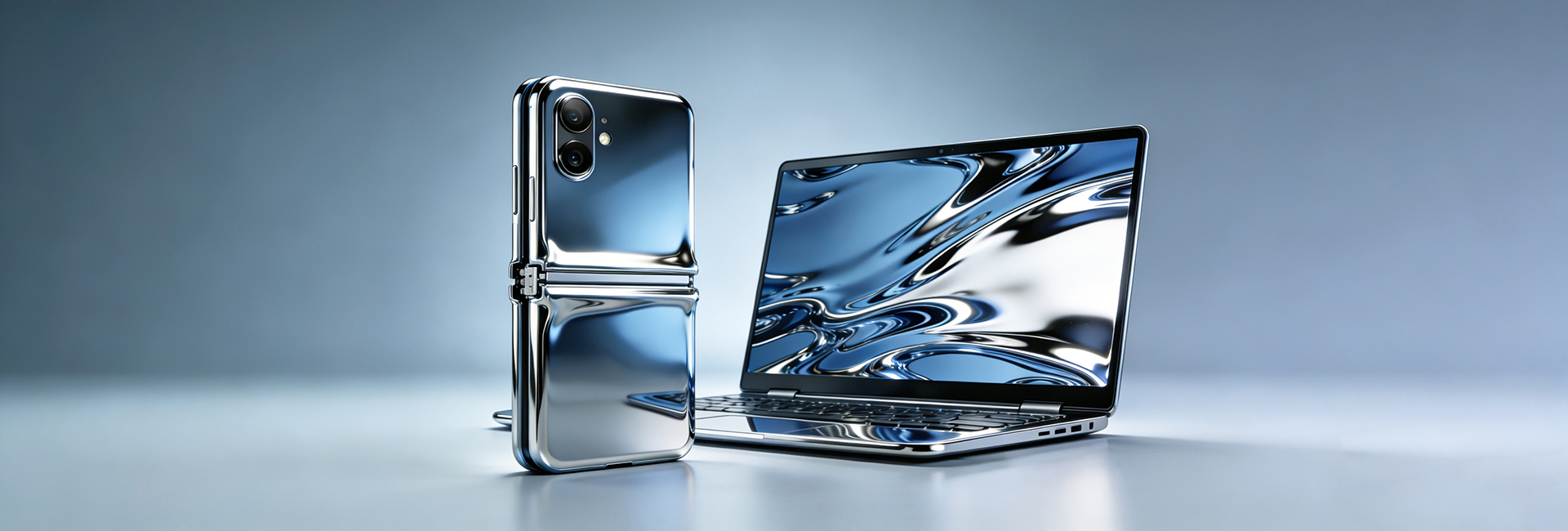
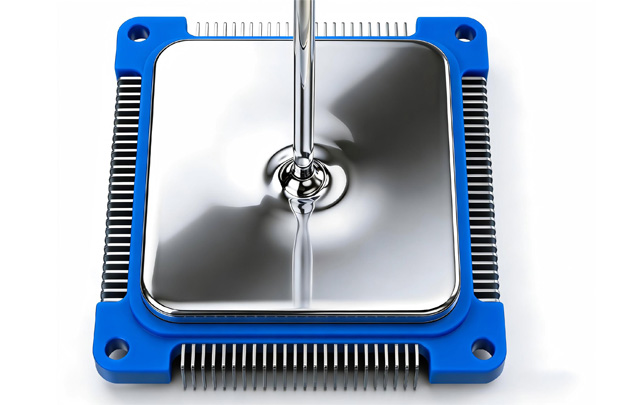
[Introduction] With the rapid iteration of electronic devices towards high power, high density, and miniaturization, traditional thermal grease can no longer meet the heat dissipation needs of high heat flux devices. As a cutting-edge new material included in the national "Guidelines for the First Batch of Application Demonstration of Key New Materials", liquid metal thermal paste, relying on its thermal conductivity far exceeding that of traditional thermal grease and stable physical and chemical properties, is gradually penetrating into many core fields such as high-performance computing, automotive electronics, and industrial manufacturing, becoming a key support for promoting industrial technological upgrading. Liquid metal thermal paste takes low-melting-point alloys such as gallium-based, indium-based, and bismuth-based as the core components. It is in a stable paste state at room temperature, which can be evenly applied between heating devices and radiators, fill micro gaps and exclude air, and build a thermal conductive channel with extremely low thermal resistance. Its thermal conductivity can reach 5-10 times that of traditional thermal grease, and its high temperature resistance can reach up to 500℃. It also has the advantages of no volatilization, no drying, and safety and environmental protection, adapting to various harsh heat dissipation scenarios. At present, its application fields have achieved multi-dimensional expansion, covering many core tracks such as consumer electronics, industrial manufacturing, and high-end computing power, showing broad industrial application prospects. High-Performance Computing and AI Field: Building a Solid Heat Dissipation Line of Defense for Computing Power Core In the field of high-performance computing (HPC) and AI, as chip power consumption continues to rise, heat dissipation efficiency has become a key bottleneck restricting the performance release of equipment. Relying on its excellent thermal conductivity, liquid metal thermal paste has become the core heat dissipation material for high-end computing power equipment. In CPUs, GPUs, AI accelerators, and edge computing devices, it can achieve atomic-level interface bonding, greatly reduce contact thermal resistance, keep the chip temperature stable during high-load operation, and avoid frequency reduction and downtime caused by overheating. It is reported that NVIDIA's Rubin and Blackwell platforms have designated the liquid metal thermal conductivity solution as the standard configuration for 2300W-level GPUs. Its advantage of 70-75W/m·K thermal conductivity can support the stable operation of chips with power consumption exceeding 1000W, directly promoting the computing power breakthrough in fields such as supercomputing and AI training. At the same time, in data center servers, liquid metal thermal paste is compatible with copper-based or nickel-plated radiators, which can effectively solve the heat dissipation problems of server CPUs, PCHs, and high-power optical modules, providing guarantee for the efficient and stable operation of data centers. Automotive Electronics Field: Assisting the Intelligent Upgrade of On-Board Equipment With the acceleration of the intelligentization and electrification of automobiles, the power density of on-board electronic equipment such as ADAS main control modules, on-board computing platforms, and millimeter-wave radars is constantly increasing, and the requirements for heat dissipation reliability are becoming more and more stringent. Relying on good temperature adaptability and stability, liquid metal thermal paste has achieved large-scale application in the automotive electronics field, focusing on heat dissipation of high heat flux devices in non-power battery directions. In the ADAS main control heat dissipation module, liquid metal thermal paste can quickly conduct the heat generated by the chip during operation to ensure the accurate response of the automatic driving system; in the on-board computing platform and millimeter-wave radar processing unit, its stable thermal conductivity can avoid equipment performance attenuation in high-temperature environments and ensure the all-weather reliable operation of the on-board electronic system. In addition, its characteristics of no volatilization and resistance to high and low temperatures are also compatible with the complex driving environment of automobiles, effectively extending the service life of on-board electronic equipment. Industrial and Power Supply Field: Solving the Heat Dissipation Problem of High-Power Devices In the field of industrial production and power supply equipment, devices such as IGBT modules, high-power power supply modules, and industrial control systems operate in high-temperature and high-load conditions for a long time. Heat dissipation performance directly determines the operational stability and service life of the equipment. Relying on the advantages of high thermal conductivity and low thermal resistance, liquid metal thermal paste can effectively solve the heat dissipation pain points of such high-power devices and become the preferred material for thermal management in the industrial field. In IGBT modules, liquid metal thermal paste can quickly conduct the heat generated by the module during operation to the radiator, reduce the thermal stress of the module, and avoid module damage caused by overheating; in high-power power supply modules and industrial control systems, its stable thermal conductivity can ensure that the equipment maintains stable temperature during long-term high-load operation and reduce the incidence of failures. At the same time, its characteristics of reusability and low after-sales cost also reduce the maintenance cost of industrial equipment and improve production efficiency. Consumer Electronics Field: Balancing Performance and Portability Needs In the consumer electronics field, with the popularization of products such as e-sports hosts, high-power fast charging modules, and high-density portable computing equipment, consumers' demand for equipment performance and portability is constantly improving. Traditional thermal conductive materials can no longer balance the needs of heat dissipation efficiency and equipment miniaturization. The emergence of liquid metal thermal paste provides a new solution for heat dissipation of consumer electronics. In e-sports hosts, liquid metal thermal paste can effectively reduce the operating temperature of CPUs and GPUs, allowing the equipment to maintain high-performance output during full-load operation and improve the gaming experience; in high-power fast charging modules, its rapid thermal conductivity can avoid overheating of the equipment during charging and ensure charging safety; in high-density portable computing equipment, its paste characteristics can adapt to narrow installation spaces, achieving efficient heat dissipation without increasing the equipment volume, helping the equipment upgrade towards thinness, lightness, and high performance. In addition, indium-based liquid metal thermal paste has gradually opened up the mainstream consumer electronics market by virtue of its advantages such as high reliability and long service life. Special Fields: Supporting Technological Breakthroughs in High-End Equipment In addition to the civilian field, liquid metal thermal paste also plays an important role in special fields such as aerospace and military industry. In aerospace electronic equipment, its characteristics of resistance to extreme temperatures and no volatilization can adapt to the complex temperature environment in space, providing reliable heat dissipation guarantee for electronic devices in satellites and spacecraft; in the military field, its efficient thermal conductivity can be applied to high-end equipment such as military lasers, radar systems, and electromagnetic guns, solving the heat dissipation problem of high heat flux devices and improving the combat performance and stability of the equipment. [Conclusion] At present, with the development of the thermal management industry towards high efficiency and refinement, the application scenarios of liquid metal thermal paste are still continuing to expand. Insiders said that in the future, with the continuous optimization of material preparation technology, liquid metal thermal paste will gradually overcome the corrosion problem of aluminum substrates, reduce production costs, further penetrate into more emerging fields, and at the same time promote the iterative upgrading of thermal management technology, injecting new momentum into the high-quality development of various industries. It is reported that at present, some enterprises have realized the large-scale production of liquid metal thermal paste, formed a complete product matrix, which can meet the customized needs of different fields, and promoted the liquid metal industry to enter a new stage of large-scale application.
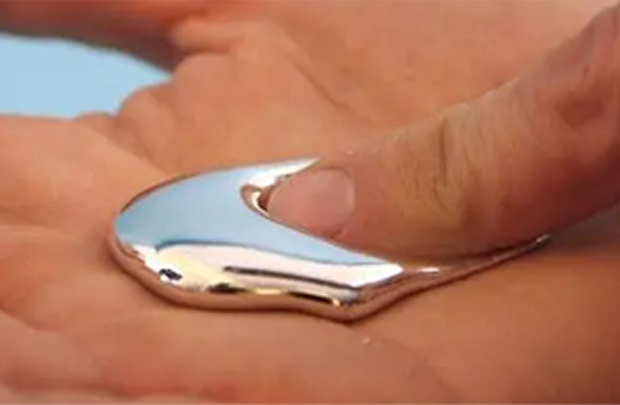
[Introduction] As a revolutionary new material that has attracted widespread attention in the field of thermal management and advanced manufacturing, liquid metal has broken the inherent cognition of traditional metal materials with its unique physical and chemical properties. Different from solid metals and conventional thermal conductive materials such as thermal grease, liquid metal has a series of special characteristics that are difficult to replicate, which not only endow it with broad application prospects in many fields but also become the core support for technological innovation in related industries. This article will focus on interpreting the core characteristics of liquid metal and its special advantages that distinguish it from other materials. Room-Temperature Liquidity: Breaking the Form Limitation of Metal Materials The most prominent and special feature of liquid metal is its stable liquid state at room temperature (20-25℃). Unlike most metals that exist in solid form at room temperature and require high-temperature melting to become liquid, liquid metal is mainly composed of low-melting-point alloys such as gallium-based, indium-based, and bismuth-based, with a melting point as low as -19℃ (gallium-indium alloy) and no more than 150℃ at the highest. This unique room-temperature liquidity allows it to flow freely like a liquid, while retaining the excellent thermal and electrical conductivity inherent to metals. Compared with solid metals, liquid metal can perfectly fit the surface of irregularly shaped devices, fill tiny gaps that are difficult to reach by solid materials, and form a seamless contact interface; compared with traditional thermal conductive pastes, it does not have the problems of drying, volatilization, or aging after long-term use, and can maintain stable liquidity and thermal conductivity for a long time. This characteristic makes it especially suitable for heat dissipation scenarios of high-precision, irregularly shaped electronic devices. Ultra-High Thermal Conductivity: Far Surpassing Conventional Thermal Conductive Materials Another special advantage of liquid metal is its ultra-high thermal conductivity, which is the core reason why it can replace traditional thermal grease in high-heat-flux scenarios. The thermal conductivity of liquid metal is generally between 40-100 W/m·K, among which the thermal conductivity of indium-based liquid metal can reach 70-75 W/m·K, which is 5-10 times that of traditional silicone thermal grease (usually 8-15 W/m·K) and even higher than some solid metal materials such as aluminum (about 237 W/m·K in theory, but the actual thermal conductivity of processed aluminum parts will decrease due to process limitations). What is more special is that the thermal conductivity of liquid metal is stable in a wide temperature range (-50℃ to 500℃), and there will be no obvious attenuation even in extreme high or low temperature environments. This is very different from traditional thermal conductive materials whose thermal conductivity decreases sharply under high temperature conditions. In addition, liquid metal can form a thermal conductive channel with extremely low contact thermal resistance between the heating device and the radiator, which can quickly transfer heat to the radiator, effectively solving the heat accumulation problem of high-power devices. Excellent Chemical Stability: Safe and Durable in Harsh Environments Liquid metal has excellent chemical stability that is difficult to match by many materials, which is another key special feature of it. First of all, it has good corrosion resistance. Except for a few metals such as aluminum and zinc, liquid metal will not react with most metal materials (such as copper, nickel, stainless steel) and non-metal materials, and will not produce corrosion products that affect the performance of equipment. This makes it compatible with most radiators and electronic device shells in the market. Secondly, liquid metal has no volatilization, no toxicity, and no pollution. Unlike some organic thermal conductive materials that will volatilize harmful gases at high temperatures, liquid metal is composed of inert metal elements, which will not volatilize or decompose even in high-temperature environments, and will not cause damage to the environment and human body. In addition, it has strong oxidation resistance. Under normal atmospheric conditions, a thin and dense oxide film will be formed on its surface, which can prevent internal metal elements from being oxidized and ensure the long-term stability of its performance. This characteristic makes it suitable for long-term use in harsh environments such as automotive electronics, industrial control, and aerospace. Adjustable Performance: Customizable for Diversified Needs Different from traditional materials with fixed performance, liquid metal has the special advantage of adjustable performance. By adjusting the proportion of alloy components (such as gallium, indium, bismuth, tin, etc.), its melting point, thermal conductivity, viscosity, and other key performance indicators can be flexibly adjusted to meet the customized needs of different application scenarios. For example, in low-temperature environments such as aerospace, a gallium-indium-tin alloy with a low melting point (-19℃) can be selected to ensure that it remains liquid at ultra-low temperatures; in high-power industrial equipment, an indium-based alloy with high thermal conductivity can be used to improve heat dissipation efficiency; in consumer electronic devices that require low viscosity and easy application, a gallium-based alloy with low viscosity can be customized. This adjustable performance makes liquid metal have strong adaptability and can be widely used in different fields from civilian to special industries. Reusability: Reducing Application Costs Compared with traditional thermal conductive materials that are mostly disposable (such as thermal grease, which needs to be replaced after aging), liquid metal has the special feature of reusability. Due to its stable physical and chemical properties, it will not dry, harden, or degrade after long-term use. After disassembly and cleaning, it can be reused on other devices, which greatly reduces the application cost and environmental pressure. For example, in the maintenance of industrial equipment and electronic devices, the liquid metal after disassembly can be collected, filtered, and purified, and then reused, which not only saves material costs but also reduces the generation of electronic waste. This characteristic is especially important for large-scale application scenarios such as data centers and industrial manufacturing, which can effectively reduce the overall operation and maintenance costs. [Conclusion] The special characteristics of liquid metal, such as room-temperature liquidity, ultra-high thermal conductivity, excellent chemical stability, adjustable performance, and reusability, make it stand out from traditional materials and become a key material driving the upgrading of thermal management and advanced manufacturing industries. With the continuous advancement of material preparation technology, the performance of liquid metal will be further optimized, and its special advantages will be brought into play in more emerging fields, providing powerful support for technological innovation and industrial upgrading. It is worth noting that although liquid metal has many special advantages, its application also needs to pay attention to the compatibility with aluminum substrates. With the solution of corrosion problems, liquid metal will usher in a broader development space.
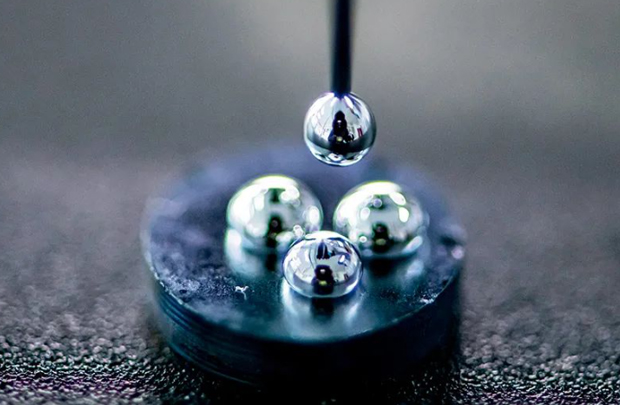
Liquid metal boasts promising prospects, characterized by outstanding advantages, expanding scenarios, growing scale, and remaining challenges. Its development can be clearly interpreted from four dimensions: I. Core Advantages Lay a Solid Foundation With unique properties including room-temperature fluidity, ultra-high thermal conductivity, and excellent chemical stability (detailed earlier), liquid metal is irreplaceable in scenarios incompatible with traditional materials. It aligns with the trends of miniaturized electronic devices, high-power industrial equipment, and precision high-end equipment, serving as a core material for upgrading thermal management and advanced manufacturing, and underpinning its long-term development. II. Expanding Application Scenarios & Strong Growth Momentum Current applications cover thermal management, automotive electronics, aerospace, etc., and will extend to more emerging sectors: ● Consumer Electronics: Rising penetration of foldable smartphones drives demand for liquid metal hinges, with a per-unit value of RMB 500–1000, becoming a major growth engine. It also empowers esports devices, fast-charging modules, etc., to meet high-performance and slim design requirements. ● Automotive: Magnesium-based and aluminum-based liquid metal enable vehicle lightweighting (30%–50% lighter than conventional steel) and reduce fuel consumption by 10%–15%. Demand in the automotive sector is projected to reach 20,000 tonnes in 2025, with a market size exceeding RMB 10 billion, matching the energy-saving and high-efficiency direction of new energy vehicles. ● Healthcare: Mg-Zn-Ca-based liquid metal features favorable biocompatibility, applicable to dental implants, cardiovascular stents, etc. The medical market is expected to hit RMB 8 billion in 2025, growing at over 20% annually, with huge potential. ● Cutting-edge Fields: Applications in flexible electronics, energy storage, soft robots, microfluidic chips are gradually moving from labs to commercial pilots, representing future growth points. III. Rapid Market Growth & Evolving Industrial Structure The global liquid metal market is forecast to exceed RMB 50 billion in 2025 and reach RMB 120 billion by 2030, with a CAGR of over 15%. Notably, the sector is expected to see a CAGR as high as 35% in 2026, making it a hotspot in new materials.China currently accounts for 42% of global liquid metal shipments. The industrial chain is rapidly extending from material preparation to end applications, with some enterprises achieving large-scale production and a complete product portfolio, supporting sustainable industrial development. IV. Coexisting Challenges & Opportunities, Promising Long-term Outlook Key bottlenecks remain:1.Incompatibility with aluminum substrates is not fully resolved, restricting certain applications.2.High preparation costs limit large-scale popularization.3.Some cutting-edge applications are still in R&D or pilot phases, requiring higher technological maturity. With continuous advances in material preparation, surface modification and other technologies, these bottlenecks will be gradually overcome. Backed by global policy support for new materials and surging downstream demand, liquid metal will penetrate more fields, transitioning from specialized applications to large-scale civilian use.It enjoys broad long-term prospects and is expected to become a next-generation industrial foundation, supporting technological transformation across multiple industries.

Contact phone number:

101, Building 13, Wanchuangyuan, No. 83 Zhanlun Road, Daliang Street, Shunde District, Foshan City, Guangdong Province

247222953@qq.com