
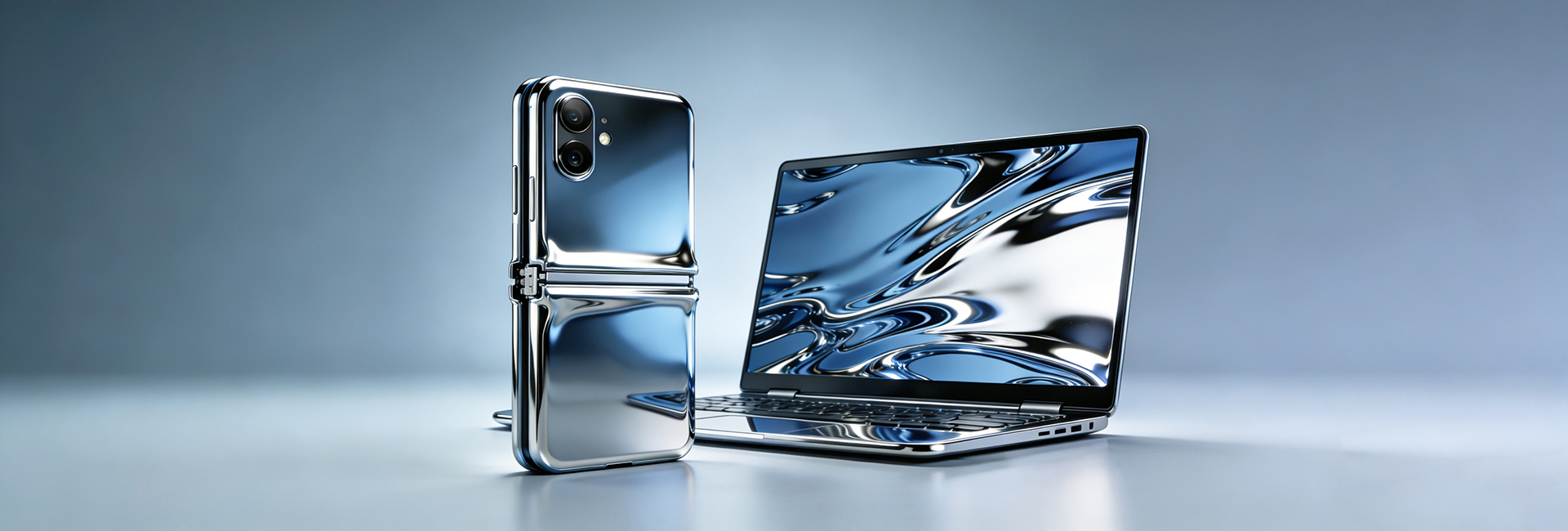
[Introduction] As a revolutionary new material that has attracted widespread attention in the field of thermal management and advanced manufacturing, liquid metal has broken the inherent cognition of traditional metal materials with its unique physical and chemical properties. Different from solid metals and conventional thermal conductive materials such as thermal grease, liquid metal has a series of special characteristics that are difficult to replicate, which not only endow it with broad application prospects in many fields but also become the core support for technological innovation in related industries. This article will focus on interpreting the core characteristics of liquid metal and its special advantages that distinguish it from other materials.
The most prominent and special feature of liquid metal is its stable liquid state at room temperature (20-25℃). Unlike most metals that exist in solid form at room temperature and require high-temperature melting to become liquid, liquid metal is mainly composed of low-melting-point alloys such as gallium-based, indium-based, and bismuth-based, with a melting point as low as -19℃ (gallium-indium alloy) and no more than 150℃ at the highest. This unique room-temperature liquidity allows it to flow freely like a liquid, while retaining the excellent thermal and electrical conductivity inherent to metals.
Compared with solid metals, liquid metal can perfectly fit the surface of irregularly shaped devices, fill tiny gaps that are difficult to reach by solid materials, and form a seamless contact interface; compared with traditional thermal conductive pastes, it does not have the problems of drying, volatilization, or aging after long-term use, and can maintain stable liquidity and thermal conductivity for a long time. This characteristic makes it especially suitable for heat dissipation scenarios of high-precision, irregularly shaped electronic devices.
Another special advantage of liquid metal is its ultra-high thermal conductivity, which is the core reason why it can replace traditional thermal grease in high-heat-flux scenarios. The thermal conductivity of liquid metal is generally between 40-100 W/m·K, among which the thermal conductivity of indium-based liquid metal can reach 70-75 W/m·K, which is 5-10 times that of traditional silicone thermal grease (usually 8-15 W/m·K) and even higher than some solid metal materials such as aluminum (about 237 W/m·K in theory, but the actual thermal conductivity of processed aluminum parts will decrease due to process limitations).
What is more special is that the thermal conductivity of liquid metal is stable in a wide temperature range (-50℃ to 500℃), and there will be no obvious attenuation even in extreme high or low temperature environments. This is very different from traditional thermal conductive materials whose thermal conductivity decreases sharply under high temperature conditions. In addition, liquid metal can form a thermal conductive channel with extremely low contact thermal resistance between the heating device and the radiator, which can quickly transfer heat to the radiator, effectively solving the heat accumulation problem of high-power devices.
Liquid metal has excellent chemical stability that is difficult to match by many materials, which is another key special feature of it. First of all, it has good corrosion resistance. Except for a few metals such as aluminum and zinc, liquid metal will not react with most metal materials (such as copper, nickel, stainless steel) and non-metal materials, and will not produce corrosion products that affect the performance of equipment. This makes it compatible with most radiators and electronic device shells in the market.
Secondly, liquid metal has no volatilization, no toxicity, and no pollution. Unlike some organic thermal conductive materials that will volatilize harmful gases at high temperatures, liquid metal is composed of inert metal elements, which will not volatilize or decompose even in high-temperature environments, and will not cause damage to the environment and human body. In addition, it has strong oxidation resistance. Under normal atmospheric conditions, a thin and dense oxide film will be formed on its surface, which can prevent internal metal elements from being oxidized and ensure the long-term stability of its performance. This characteristic makes it suitable for long-term use in harsh environments such as automotive electronics, industrial control, and aerospace.
Different from traditional materials with fixed performance, liquid metal has the special advantage of adjustable performance. By adjusting the proportion of alloy components (such as gallium, indium, bismuth, tin, etc.), its melting point, thermal conductivity, viscosity, and other key performance indicators can be flexibly adjusted to meet the customized needs of different application scenarios.
For example, in low-temperature environments such as aerospace, a gallium-indium-tin alloy with a low melting point (-19℃) can be selected to ensure that it remains liquid at ultra-low temperatures; in high-power industrial equipment, an indium-based alloy with high thermal conductivity can be used to improve heat dissipation efficiency; in consumer electronic devices that require low viscosity and easy application, a gallium-based alloy with low viscosity can be customized. This adjustable performance makes liquid metal have strong adaptability and can be widely used in different fields from civilian to special industries.
Compared with traditional thermal conductive materials that are mostly disposable (such as thermal grease, which needs to be replaced after aging), liquid metal has the special feature of reusability. Due to its stable physical and chemical properties, it will not dry, harden, or degrade after long-term use. After disassembly and cleaning, it can be reused on other devices, which greatly reduces the application cost and environmental pressure.
For example, in the maintenance of industrial equipment and electronic devices, the liquid metal after disassembly can be collected, filtered, and purified, and then reused, which not only saves material costs but also reduces the generation of electronic waste. This characteristic is especially important for large-scale application scenarios such as data centers and industrial manufacturing, which can effectively reduce the overall operation and maintenance costs.
[Conclusion] The special characteristics of liquid metal, such as room-temperature liquidity, ultra-high thermal conductivity, excellent chemical stability, adjustable performance, and reusability, make it stand out from traditional materials and become a key material driving the upgrading of thermal management and advanced manufacturing industries. With the continuous advancement of material preparation technology, the performance of liquid metal will be further optimized, and its special advantages will be brought into play in more emerging fields, providing powerful support for technological innovation and industrial upgrading. It is worth noting that although liquid metal has many special advantages, its application also needs to pay attention to the compatibility with aluminum substrates. With the solution of corrosion problems, liquid metal will usher in a broader development space.

Contact phone number:

101, Building 13, Wanchuangyuan, No. 83 Zhanlun Road, Daliang Street, Shunde District, Foshan City, Guangdong Province

247222953@qq.com